

Car Driving School : Car Games
Spark Game Studios
I approached Car Driving School: Car Games expecting a light driving title, but it works better when treated as a strategy game built around careful progress. Its central idea is simple: you practice driving, work toward a license, and learn to handle a car through game-like challenges rather than a pure racing format. That difference matters. I am not usually looking for a game that asks me to crawl through ordinary road situations, yet this one became more enjoyable when I stopped trying to drive quickly and started treating each task as a small test of control.
The game is free to download, with optional purchases ranging from $1.99 to $36.99 per item. Spark Game Studios is the developer, and the title has reached over 100 million installs with a 3.9 average from around 303 thousand ratings. Those figures suggest a very broad audience, although the rating also hints at a mixed experience rather than universal approval. After spending time with it, I can understand both sides: it is approachable and easy to pick up, but its appeal depends heavily on whether you enjoy repetition, cautious driving, and learning through trial and error.
How the current driving-school experience feels
The first thing I noticed is that the game does not rely on the usual racing-game fantasy of constant speed. The pleasure comes from positioning the car, responding to the road, and completing an objective without turning a simple maneuver into a mistake. That gives the game a slower rhythm than arcade racers and makes it more suitable for short practice sessions than for players seeking nonstop excitement.
Its strategy classification makes more sense once I played with a plan. I had to think about when to accelerate, how much room to leave while turning, and whether rushing a maneuver was worth the risk of failing it. These decisions are not deep in the same way as a board strategy game, but they create a useful layer of judgment. The best approach is usually controlled rather than aggressive.
The driving-school theme also gives the sessions a clear purpose. Instead of simply collecting wins, I felt as if each attempt was about improving a specific habit: keeping the car steady, approaching a turn with patience, or avoiding careless contact. That structure is helpful for younger players and for anyone who finds open-ended driving games overwhelming. It gives you a reason to repeat a task instead of leaving you to invent your own goals.
Related News

Why WhatsApp Messenger Still Makes Everyday Communication Feel Easy

Jurassic World: The Game Is the Better Dino Tycoon for Strategic Players

Threads in Real Life: Who Should Join, Lurk, or Leave

How SHEIN Turned Shopping Into an Endless Content Feed

How to Make Fortnite Feel Smarter on Mobile

Should You Switch to Microsoft Outlook on Mobile?
At the same time, I would not describe the experience as a replacement for real driving instruction. The game can make road awareness feel more familiar, but it remains a game with simplified controls and simulated consequences. I would use it as a casual way to think about driving decisions, not as evidence that someone is ready to drive on public roads.
Controls reward patience more than speed
My most useful adjustment was to make smaller inputs than I initially wanted. New players may instinctively steer sharply or press the accelerator too hard, especially if they are used to racing games. That usually makes the car harder to place. Gentle corrections gave me more time to react and made parking-style or precision-focused moments less frustrating.
For a quick everyday scenario, imagine having ten minutes before leaving for work or school. This is a reasonable game to open for one or two attempts because a session has a clear task and does not require a long story commitment. I would play with the sound at a comfortable level, focus on one type of maneuver, and stop after a successful run rather than immediately chasing a perfect repeat. That approach keeps the practice useful instead of turning it into a cycle of rushed failures.
Gallery
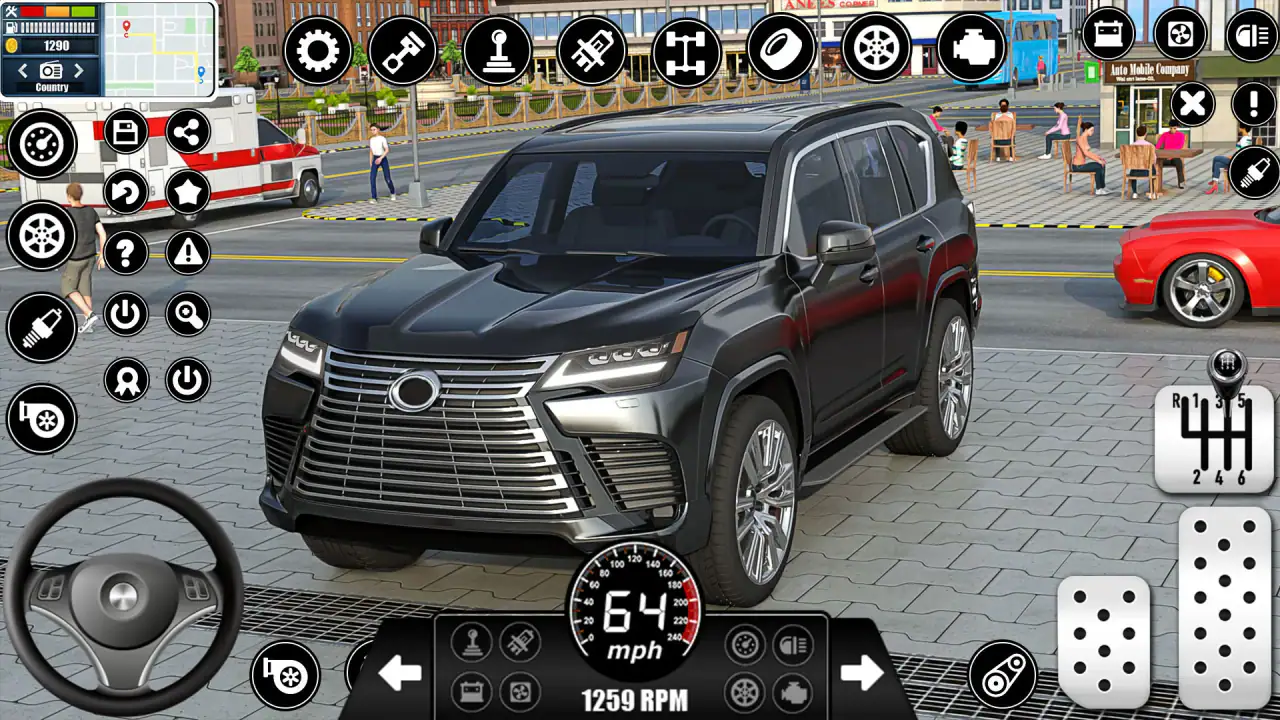
Another practical tip is to use early attempts as reconnaissance. Rather than trying to finish immediately, I first watched where the difficult turns or narrow approaches appeared. On the next attempt, I could prepare earlier. This is a small change, but it reduces the feeling that failure is random. The game becomes more readable when I treat each run as information gathering.
Who gets the most from it
I think the strongest audience is made up of casual players who like vehicles but do not necessarily want competitive racing. It also suits someone who enjoys structured challenges, gradual improvement, and a driving theme without the pressure of a multiplayer match. Younger users may appreciate the familiar license-school framing, though the Teen content rating means parents should still make their own judgment about whether it fits their child.
It can also work for players who want a low-commitment game to revisit. The free entry point makes it easy to test without paying first, and the large install base means it is clearly not an obscure experiment. Still, I would not install it expecting a serious simulator. Anyone searching for detailed vehicle physics, realistic training standards, or a highly competitive leaderboard experience will probably find a dedicated alternative more satisfying.
Players who dislike repeating a maneuver after a small error should think twice. The learning loop depends on retrying, and that can feel encouraging when I know what I did wrong but irritating when the controls do not seem to respond as expected. Likewise, racing fans who measure fun by speed may find the school format restrictive. The game asks for restraint, which is either its main strength or its biggest obstacle depending on personal taste.
What has changed and what that means for players
The current release is version 2.67, while the game first appeared on September 16, 2019. That combination tells me this is an established title rather than a brand-new driving prototype. A product that has continued through multiple version changes has had time to settle into its identity, and this one remains focused on the same broad promise: learning car control through game challenges.
I would be careful not to treat the version number as proof that every part of the experience has been transformed. What I can say from the present build is that the game feels like a mature, ongoing product rather than a one-off release. For new players, that means the sensible question is not whether it is fashionable, but whether its controlled driving loop matches what they want today.
For existing users, a newer build can be reassuring because it shows continued attention to the product. It may also mean that returning players should expect the current handling and progression to feel different from their memories of an earlier version. My advice is to spend a few minutes recalibrating rather than assuming old habits will work perfectly. In driving games, even small changes in responsiveness can alter how early I need to steer or brake.
The long life of the game also affects how I judge its rough edges. I am more willing to forgive a simple presentation in a focused casual title than I would in a new premium simulator, but ongoing development raises expectations about consistency. The game does not need to become a full simulation to be worthwhile; it does need to make failures understandable and controls dependable enough that improvement feels earned.
Free access and the purchase decision
The free model is useful because I can try the core experience before deciding whether it deserves a place on my phone. I recommend doing exactly that. Play enough to learn whether the steering, pace, and repetition feel comfortable before considering an optional purchase. A payment cannot solve a basic mismatch between the player and the game’s style.
The available in-app items span from $1.99 to $36.99 each, so spending can become significant if someone buys impulsively. I would approach purchases as convenience choices rather than requirements for enjoying the concept. If the free version already provides the kind of driving practice I want, there is no reason to spend simply because a difficult attempt was frustrating. Waiting until I understand what a purchase changes is the more sensible workflow.
This is also where the game differs from a traditional paid driving title. A one-time purchase usually gives a clearer sense of cost from the beginning, while a free game with optional items asks the player to manage boundaries over time. For families, I would discuss that distinction before handing the game to a child. For individual players, setting a personal spending limit makes the free download genuinely low-risk rather than merely appearing that way.
Where it still falls short
The biggest limitation is that the game’s educational framing can promise more than the gameplay can truly deliver. It may encourage attention and patience, but it cannot reproduce the judgment, traffic awareness, physical feedback, or responsibility of real driving. I would never use it as the only preparation for a license. A real instructor, official study material, and supervised practice are better choices for actual road readiness.
The second weakness is repetition. Repeating a challenge is satisfying when I can identify a specific improvement, but it becomes tiring when the same type of task appears without enough variation. This is the point where a more open driving game may be better. Free-roaming alternatives give me space to explore, while racing games provide stronger excitement. This title is most convincing when I want a defined exercise, not a complete virtual car lifestyle.
There is also a trade-off between accessibility and depth. A simpler control scheme lets a new player start quickly, but it may leave experienced simulation fans wanting more precise feedback. I enjoyed the approachable structure, yet I would not recommend it to someone who already spends time with demanding driving simulators and expects detailed mechanical behavior. The game’s value is in its guided, casual format.
How I would use it and what to watch next
If I were introducing it to a friend, I would suggest beginning with short sessions and one clear goal. Focus on smooth steering first, then work on timing, and only after that worry about finishing quickly. This order matters because speed can hide weak control. A player who builds a stable approach will usually get more out of the challenges than someone who treats every attempt as a race.
I would also recommend playing when I can concentrate. A driving task may look simple, but checking messages or playing while distracted makes small errors more likely. The game is casual, yet its best moments come from paying attention to spacing and timing. That makes it a surprisingly decent break from faster games, provided I accept its calmer pace.
When evaluating future updates, I would watch for improvements that make progress clearer and mistakes easier to understand. Better guidance would help beginners learn from an unsuccessful attempt instead of merely repeating it. I would also value variety that preserves the driving-school identity rather than turning the title into a conventional racer. The strongest direction would be broader practice without losing the focused structure that gives the game its personality.
Existing players should pay attention to how the current version affects their familiar routines. If a maneuver feels different after updating, I would test it slowly and adjust my inputs before blaming the challenge. New players, meanwhile, should judge the game on the first few sessions rather than on its large install count or average rating. Popularity can show reach, but it cannot decide whether the controls suit a particular person.
My final view is positive but specific. This is best understood as a casual driving practice game, not a real driving course and not a racing blockbuster. I like its emphasis on patience, its clear objectives, and the way it gives ordinary car control a sense of progression. I also recognize the limits: repetition can wear thin, the simulation is necessarily simplified, and optional purchases require restraint.
For someone who wants a free strategy game with a car theme and structured challenges, I think it is worth trying. For someone who wants realistic training, deep vehicle physics, or constant high-speed action, I would point elsewhere. After several sessions, I found that its success depends less on flashy presentation and more on whether the player enjoys improving one careful maneuver at a time. That is a modest idea, but when approached on its own terms, it gives Car Driving School: Car Games a clear and useful place among mobile driving games.
FAQs for Car Driving School : Car Games
What is the main objective of Car Driving School: Car Games?
Car Driving School: Car Games aims to provide a realistic driving experience by simulating real-world driving conditions and rules. Players can enhance their driving skills by completing various levels and challenges that focus on different aspects of driving, such as parking, traffic signals, and pedestrian crossings.
Is Car Driving School: Car Games suitable for beginners?
Yes, the game is designed to cater to both beginners and experienced drivers. It offers a range of levels that gradually increase in complexity, allowing new drivers to learn and practice basic driving skills, while more advanced levels provide challenges for seasoned players.
What features set Car Driving School: Car Games apart from other driving simulations?
The game distinguishes itself with its realistic graphics, detailed city environments, and a wide array of vehicles to choose from. It also emphasizes adherence to traffic rules, offering a more authentic driving experience. Additionally, the game provides a variety of weather conditions and time-of-day settings to enhance realism.
Does Car Driving School: Car Games require an internet connection to play?
While Car Driving School: Car Games can be played offline, some features, such as multiplayer modes and leaderboard access, require an internet connection. Playing offline gives access to most basic levels and challenges, making it convenient for users with limited connectivity.
Are there any in-app purchases in Car Driving School: Car Games?
Yes, the game offers in-app purchases that allow players to unlock additional vehicles, levels, and customizations. While the core game is free-to-play, these purchases can enhance the gaming experience by providing more variety and reducing wait times for unlocking new content.
Pros
- Realistic driving mechanics enhance learning.
- Variety of vehicles keeps gameplay fresh.
- Detailed city maps offer immersive experience.
- Multiplayer mode adds competitive fun.
- Frequent updates with new challenges.
Cons
- Ads can interrupt gameplay experience.
- High data usage for downloading updates.
- Occasional bugs in traffic simulation.
- Limited offline gameplay options.
- In-app purchases can be pricey.


